
Home security is unevenly distributed. Households invest in a solid front door with a quality deadbolt, then leave a rear sliding door running on the latch it came with in 1978. Anyone assessing the property is not looking at your best entry point — they are looking for your worst one.
This checklist follows the route a locksmith takes during a security assessment. Work through it with a notebook and you will finish with a prioritised list rather than a vague sense of unease.
The front door
Start with the obvious one, because it is often better than people think. Check that the deadbolt actually throws its full length into the strike plate without lifting or pulling the door. A bolt that only engages halfway is doing half the job.
Then look at the strike plate itself. A plate held by two 15mm screws into soft pine jamb is the weakest link in the entire assembly, no matter how good the lock is. Long screws driven into the structural framing behind the jamb are a ten-dollar upgrade that dramatically increases resistance to forcing.
Finally, check the door itself. Hollow-core doors are common on internal openings but occasionally appear as external doors on older extensions, and no lock compensates for a door panel you can push through.
Rear and side doors
Rear doors are the highest-risk entry point in most homes, precisely because they are out of sight from the street. A back door with only a knob-set latch and no deadlock should be at the top of your list.
Side gates matter more than people credit. A gate with a decent lock does not stop anyone determined, but it removes casual access to the whole rear of the property and forces anyone entering to be visibly climbing something.
Laundry and garage internal doors deserve a look too. A garage roller door is rarely a serious barrier, so the door between the garage and the house should be treated as an external door with a deadlock, not an internal one with a privacy latch.
Sliding doors and the bayside problem
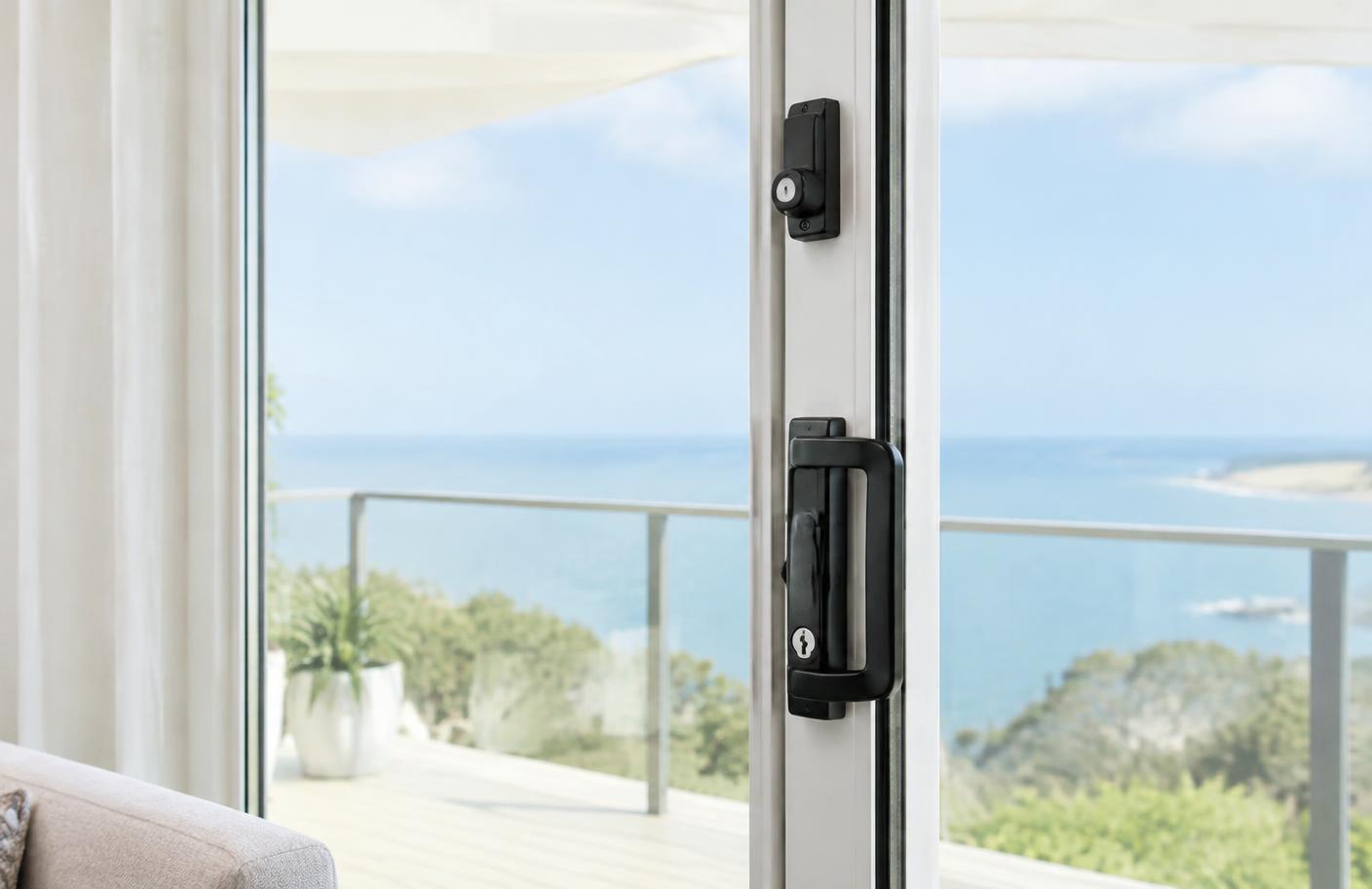
Sliding glass doors are everywhere in bayside homes and they have two classic weaknesses. The first is lifting: a worn slider can be lifted off its track even while locked. The second is the factory latch, which on older units is a light alloy hook that fails under modest force.
The fixes are simple and cheap. A patio bolt or keyed sliding door lock stops the panel moving, and anti-lift blocks in the top track stop it being raised. Both take minutes to fit and cost a fraction of a replacement door.
Salt air adds a bayside-specific issue. Sliding hardware near the beach at Parkdale, Aspendale or Black Rock corrodes faster, and a seized latch that no longer engages properly can look locked while holding nothing.
Windows
Every ground-floor window that opens should have a keyed lock, and the key should not live on the sill beside it. Most insurance policies expect keyed window locks on accessible windows, and claims have been reduced over exactly this detail.
Check window locks by trying to open the window while locked, firmly. Old aluminium sash locks frequently allow enough movement for a hand to reach through, which is all that is required to unlock a nearby door.
Do not forget the bathroom and laundry windows. They are small, frequently left ajar for ventilation, and consistently underestimated.
Lighting, sightlines and habits
Hardware is only part of the picture. Sensor lighting at the rear and side of the property removes the darkness that makes a back door attractive, and it costs very little to run.
Trim vegetation that screens doors and windows from the street or from neighbours. Privacy planting and security work against each other, and the compromise usually favours visibility at ground-floor entry points.
Then there are habits. Keys left in the inside of a deadlock beside glazing, garage remotes visible in cars parked in the driveway, and spare keys hidden outside all quietly undo good hardware.
- Sensor lights covering rear and side approaches
- Vegetation trimmed away from doors and windows
- No keys stored in locks near glass
- No garage remotes left in unattended vehicles
Turning the list into a plan
Once you have walked the property, sort your notes into three groups: things that are unsafe now, things worth doing this year, and things that are simply nice to have. Most homes have two or three items in the first group and they are usually inexpensive.
If you would rather not make the call yourself, a residential security assessment produces the same list with costs attached, and you are free to do the work in stages. There is no need to replace everything at once, and any locksmith who tells you otherwise is selling hardware rather than security.
Want this handled rather than researched?
Call and describe the situation. We'll tell you what's involved before anyone is dispatched.
Call 03 7057 3054