
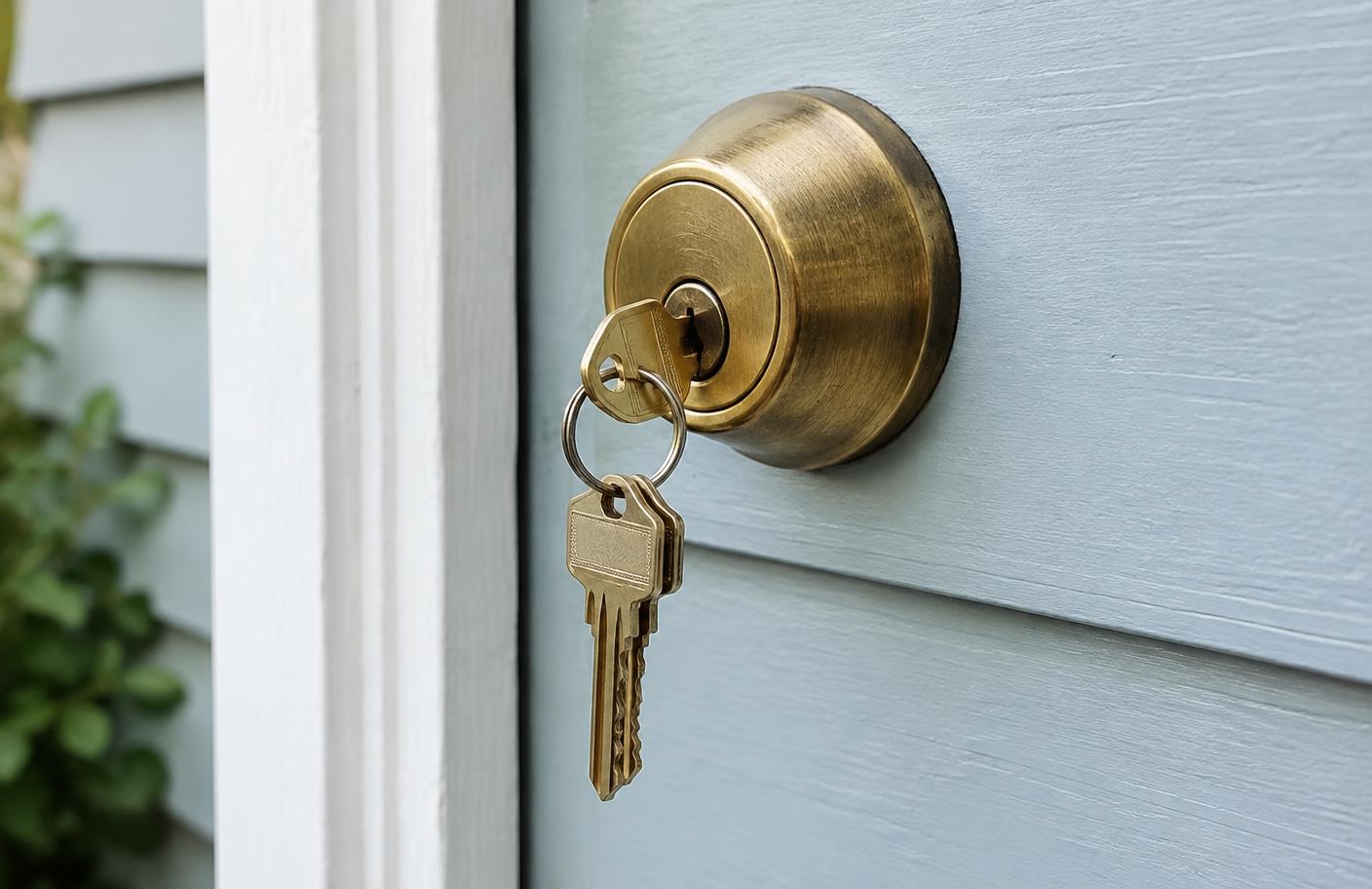
If you live on one of the streets between Beach Road and the Nepean Highway in Mentone, your front door lock is working in a tougher environment than most locks in Melbourne. Salt carried in on the breeze off Port Phillip Bay settles on every external surface, and the inside of a lock cylinder is no exception.
The damage is slow and quiet. A key that turns a little less smoothly each month, a deadlatch that needs a push before it catches, a sliding door latch that looks closed but no longer grips. This guide covers why it happens, the early warning signs, what you can safely do yourself, and when a stiff lock is telling you it is time for a locksmith.
Why bayside locks wear out faster
Salt draws moisture out of the air and holds it against metal long after a sea breeze has passed. Inside a standard cylinder are small brass pins, tiny springs and a cam that throws the bolt. Once those springs and pins start to corrode, the pins stop dropping cleanly and the key begins to bind.
Mixed metals make it worse. A steel screw driven into a brass or zinc-alloy lock body sets up a slow reaction between the two, and budget zinc-alloy handles near the coast often pit and blister within a few years.
Exposure varies a great deal from house to house. Doors that face the bay or catch the prevailing wind, side gates, meter box locks and padlocks on sheds take the worst of it, while a recessed front door under a deep porch fares much better. Homes closest to the water in Mentone, Parkdale, Aspendale, Beaumaris and Black Rock see the problem most often.
The early warning signs
A lock rarely fails without warning. It usually fails after months of small signals that were easy to put off. Walk around your external doors and gates and check for any of the following.
- A key that needs jiggling or a firmer turn than it used to
- Grey, green or gritty residue on the key when you pull it out
- A bolt or deadlatch that no longer extends fully, or a door you have to push or pull to lock
- White powdery bloom or rust spots on handles, escutcheons and strike plates
- A sliding door latch that lifts free or does not hook properly
- Gate and shed padlocks that need a whack before they open
What you can safely do yourself
Start with fresh water. Every few months, and after a long windy spell, wipe external handles, cylinders and strike plates with a damp cloth to lift the salt film, then dry them. It is the single most effective habit for a coastal home.
Lubricate with the right product. A dry lubricant made for locks, such as graphite powder or a dry PTFE spray, goes into the keyway with a short puff; then insert and turn the key several times to work it through. Avoid oily household sprays and grease in the keyway. They feel like a fix for a week, then hold salt, sand and grit against the pins and gum the cylinder up.
Check the door, not just the lock. If a door has dropped on its hinges or the strike plate has shifted, the bolt drags every time it throws, and corrosion plus friction wears it out quickly. Tightening hinge and strike screws often makes a stiff lock feel new again.
Clean sliding door tracks. Beach sand in the bottom track stops the panel closing fully, which leaves the latch sitting just short of its keeper. A vacuum and a stiff brush are all it takes.
Finally, never force a key that will not turn, and never use pliers on the key head. That is exactly how keys snap off inside a corroded cylinder.
When it is time to call a locksmith
If a key still binds after cleaning and dry lubrication, if a bolt will not throw fully, if corrosion has eaten through the finish, or if a key has bent or snapped, the problem is inside the lock and needs to be taken apart.
Often the cylinder can be stripped, cleaned and fitted with fresh pins and springs. That is also a convenient moment to rekey, so old keys in circulation stop working while the lock is already open. Our guide to rekeying versus replacing explains how that decision is made. Where the lock body itself has corroded through, replacement is the honest answer.
A lock that seizes completely rarely picks a convenient moment. If you are locked out or cannot secure a door, our emergency service is open 24/7, every day of the year.
Choosing hardware that suits a coastal home
When a lock does need replacing near the water, the finish and materials matter as much as the security rating. Look for stainless steel door furniture and fixings, ideally marine grade, and solid brass cylinders rather than plated zinc. Weather-shrouded or sealed cylinders help on fully exposed doors and gates.
Keep the metals consistent, so stainless screws go with stainless furniture. For gates and sheds, a padlock with a stainless or brass body, a shrouded shackle and a keyway cover will outlast a bargain padlock many times over.
You do not need to replace everything at once. Prioritise the most exposed doors and gates, and where your existing cylinders are still sound, new hardware can usually be keyed to match them so you keep one key for the house.
A simple maintenance routine for bayside homes
None of this takes long, and it is far less disruptive than a lock that fails on a cold night. Put a reminder in your calendar and work through it.
- Every few months: fresh-water wipe of external handles, locks and strike plates
- Twice a year: dry lubricant in every external keyway, including gates and padlocks
- Each winter: check doors still latch without a push as timber swells
- After stormy or windy weather: clean sliding door tracks and test the latches
- Straight away: get any lock that drags, sticks or leaves residue on the key looked at
Common questions about corroded locks
Can I use a general-purpose oil spray on a sticky lock? As a one-off to free a seized lock it can help, but it is not a long-term lock lubricant. Oily residue attracts salt and grit. Clean it out and switch to graphite or a dry PTFE spray.
How often should locks near the beach be serviced? A quick clean and dry lubricant every six months suits most homes close to the water. Book a professional check as soon as you notice any of the warning signs above.
Can a corroded lock be rekeyed instead of replaced? If the cylinder and body are sound once cleaned, yes. If the metal is pitted through or the lock was forced, replacement is the safer option.
Do I need marine-grade hardware on every door? No. Start with the doors, gates and padlocks that face the bay or the weather. Sheltered doors can usually keep standard hardware with regular care.
My key snapped in a corroded lock. What now? Leave the broken piece where it is and do not dig at it with tweezers or a paperclip, which pushes it deeper. Call us on 03 7057 3054 and we will extract it and sort out the cylinder.
Want this handled rather than researched?
Call and describe the situation. We'll tell you what's involved before anyone is dispatched.
Call 03 7057 3054